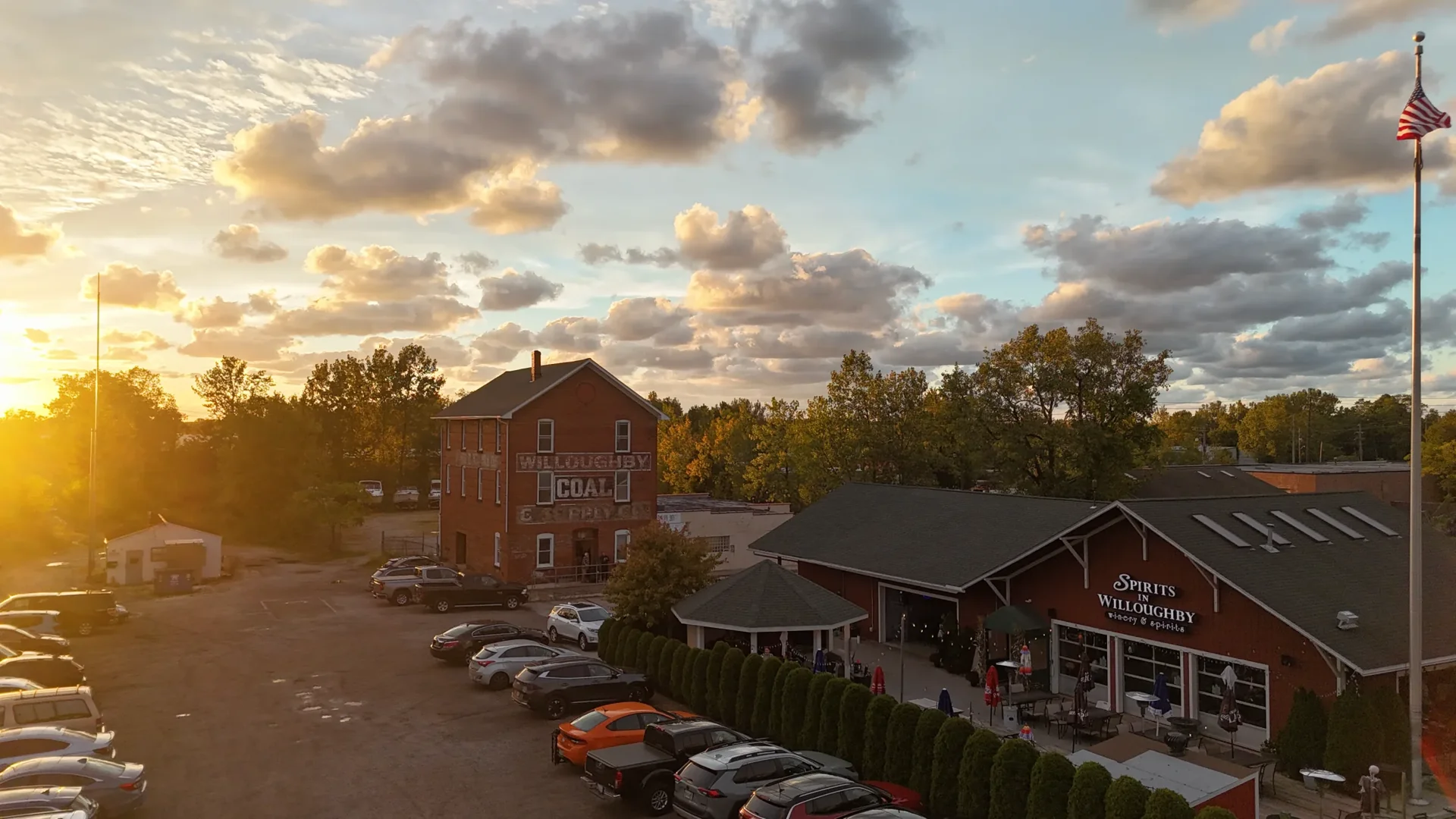
Building history
The History of Willoughby Coal & Supply
From a late-19th-century industrial building to one of Downtown Willoughby's best-known gathering places, 3872 Erie Street has accumulated more than a century of history — along with a few enduring mysteries.
Historical spine
A Century on Erie Street
c. 1893
Flour mill era
Surviving brick industrial building at 3872 Erie Street reportedly constructed; early accounts associate it with flour milling near Willoughby’s railroad corridor.
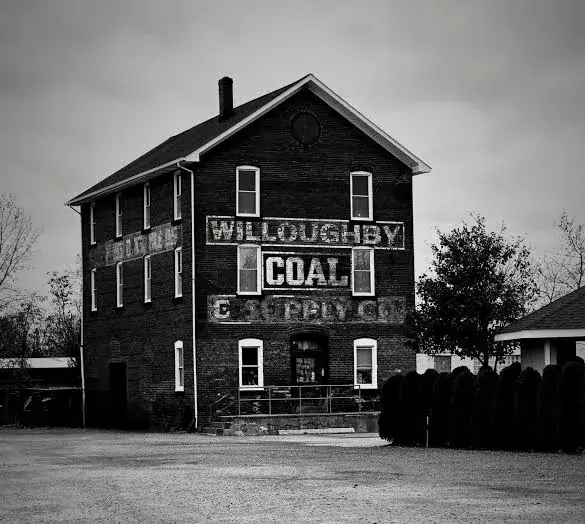
c. 1912
Coal-company use begins
Coal-company use reportedly begins; over time the property becomes widely known as Willoughby Coal & Supply.
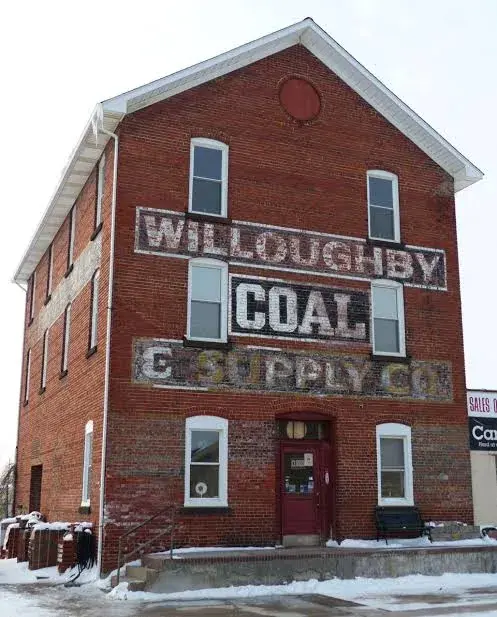
1930s
Windus and Norris era
Henry Windus and William “Don” Norris are reported to have acquired the business during the 1930s. Exact year-by-year ownership is not reconstructed here.
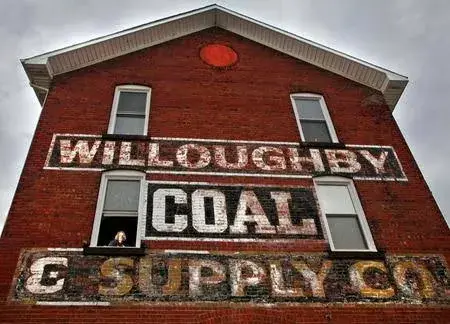
1947
Death of William “Don” Norris
On April 2, Norris dies at or immediately beside the property during remodeling work. Circumstances remain disputed in later accounts.
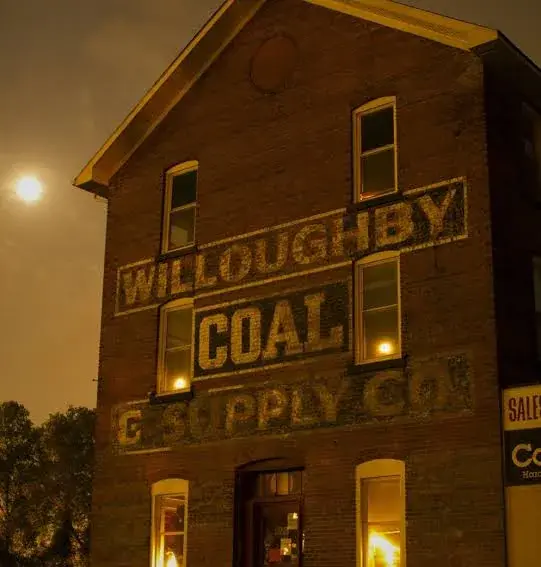
Late 1900s
Coal, hardware & supply years
Decades of coal, hardware, garden, and building-supply operations accumulate industrial objects, antiques, and local artifacts inside the working building.
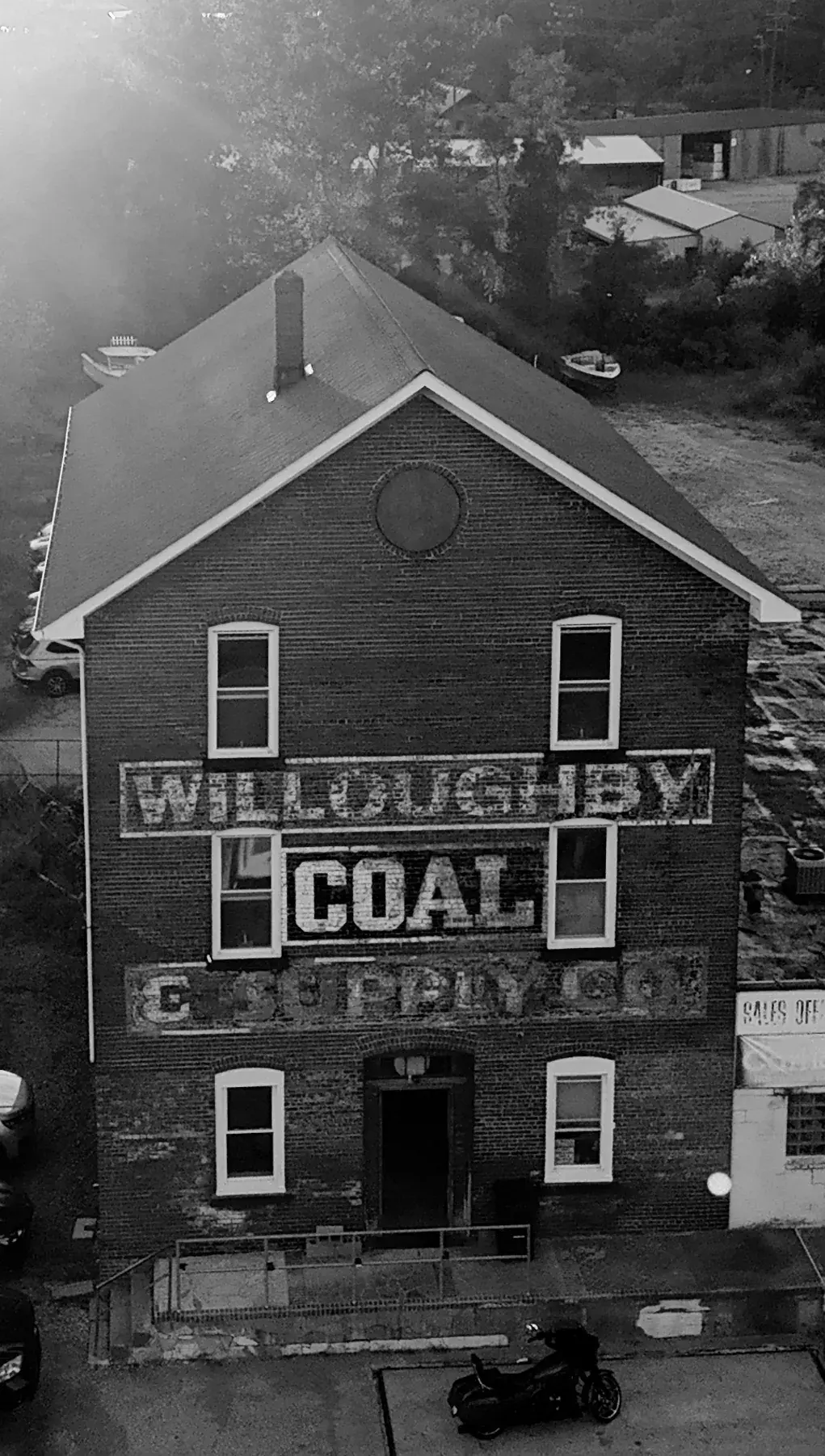
2010–2014
Regional paranormal attention
Ghost tours, paranormal books, and Cleveland-area media bring substantial regional attention to the building’s folklore — distinct from the industrial record.
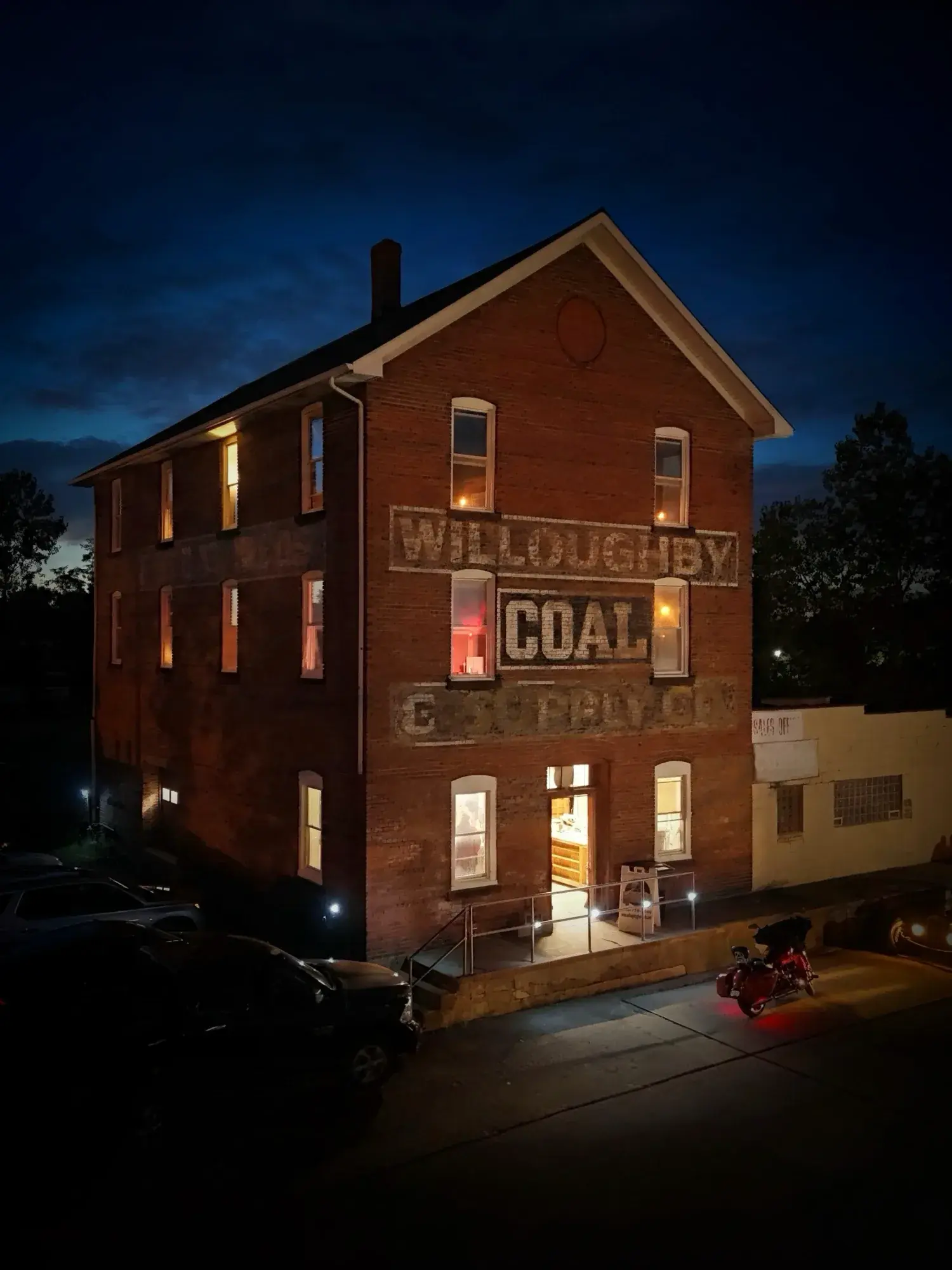
2020s
Spirits in Willoughby
The building operates as Spirits in Willoughby — a restaurant, bar, and community gathering place in Downtown Willoughby.
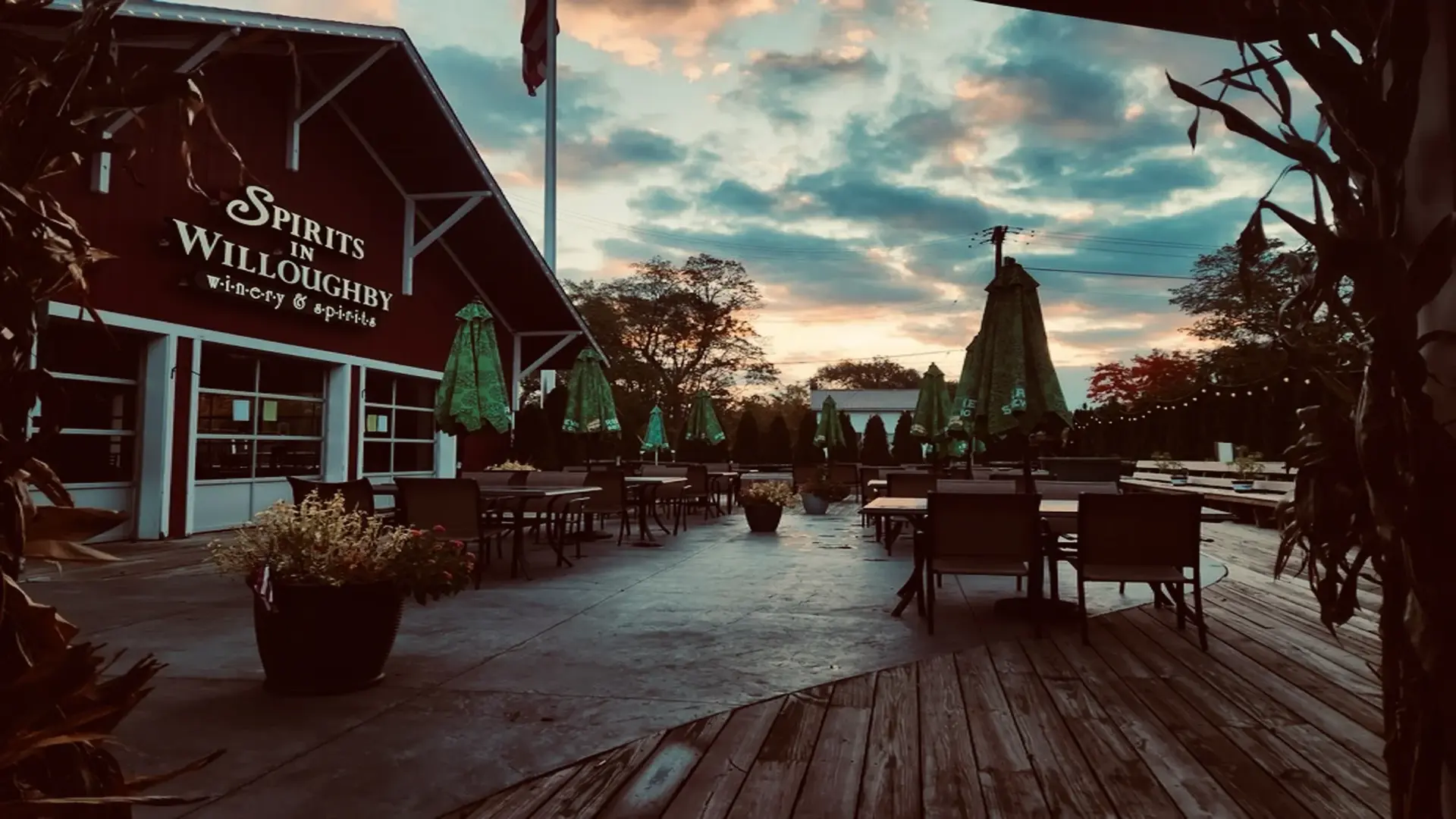
Today
The next chapter
The property continues its role as a place connected to the Willoughby community, even though its purpose has changed from coal yard to gathering place.
02 — Industrial Origins
A Building From Willoughby's Industrial Past
At 3872 Erie Street in Willoughby, Ohio, a substantial brick industrial building still anchors one of Downtown Willoughby's most recognizable corners. The surviving structure is reportedly from around 1893 — a date that places it firmly in the late-nineteenth-century expansion of Willoughby's commercial and industrial core near the railroad corridor.
Multiple historical accounts identify the building's early use as a flour mill. That association fits the period: mills, warehouses, and supply businesses clustered where rail access and river proximity made heavy goods easier to move. Over time, the property became better known for coal and building supplies, with coal-company use reportedly beginning around 1912. Later generations of locals knew the place simply as Willoughby Coal & Supply.
Historical references also associate the surrounding property — or nearby earlier structures — with railroad and depot activity, cheese production, inns or lodging, and the Zebra Stagecoach House. Those associations are part of the site's wider story. What currently available evidence does not establish is that each of those uses occupied the surviving 1893 brick structure itself. Treating every earlier land use as a claim about this exact building would flatten a more complicated documentary picture.
What remains clear is the building's industrial character: brick massing, timber framing, and a scale built for work rather than storefront display. That physical presence still shapes how visitors experience the address today — whether they arrive for dinner and drinks, live music and events, or simply to walk past one of historic Downtown Willoughby's most photographed façades.
03 — Willoughby Coal
The Willoughby Coal & Supply Years
Beginning around 1912, the property transitioned into coal and building-supply operations. Over the decades that followed, it became identified locally with Willoughby Coal & Supply — a name that still surfaces in conversation about Downtown Willoughby history even after the business itself closed.
Later accounts report that Henry Windus and William “Don” Norris acquired the business during the 1930s. From there, secondary sources describe decades of coal delivery, hardware, garden goods, and building supplies — the practical inventory of a working-class industrial town. Exact year-by-year ownership chains are not reconstructed here; where the public record has not been fully verified for this page, we avoid unsupported precision.
Longtime descriptions of the interior emphasize more than merchandise. The building accumulated industrial objects, antiques, and local artifacts — the kind of material culture that grows around a place that stays in continuous commercial use for generations. Visitors and writers often remark on the brick, timber, and high ceilings as much as on any single product once sold from the floor.
The architecture itself — industrial scale, exposed structure, and a working-building honesty — remains one of the strongest historical statements the property still makes.
That physical continuity matters. While Downtown Willoughby evolved around it, the Willoughby Coal building kept a rare industrial silhouette on Erie Street. Understanding Spirits in Willoughby history begins with understanding why that silhouette endured.
04 — The 1947 Story
April 2
1947
The Death of William “Don” Norris
Norris died at or immediately beside the property on April 2, 1947.
How the death occurred — accidental fall, suicide, foul play, or staging.
Later murder theories as legal findings.
The strongest consistent historical claim attached to the property is also its most carefully contested: Willoughby Coal co-owner William “Don” Norris died at or immediately beside the building on April 2, 1947, while remodeling work was taking place.
Later published accounts describe Norris arriving early, third-floor construction or remodeling underway, and his body discovered near the front entrance with severe injuries. Those same accounts raise questions about how he came to be found there — and they do not all answer those questions the same way.
Accessible research for this page has not located the original coroner record establishing the official manner of death. Police, probate, or court documentation establishing murder as a legal finding has likewise not been located here. For that reason, the circumstances of Norris's death should be described as disputed rather than solved.
What can be said with care is narrower: Norris died at or immediately beside Willoughby Coal on April 2, 1947; later writers and storytellers have filled the gaps around that fact with conflicting explanations; and those explanations remain unresolved in the public materials reviewed for this article.
The Partnership Story Behind the Legend
Later retellings describe a business agreement under which the surviving partner allegedly received control of the business after Norris's death. In some versions of the story, that arrangement is treated as evidence of motive.
The limitation is important. The underlying partnership agreement has not been verified in the accessible record reviewed for this page. Norris's probate file and related legal documents would be necessary before drawing firm conclusions about ownership transfer, benefits, or intent. Buy-sell or survivorship provisions are common commercial tools; on their own, they are not inherently evidence of wrongdoing.
The partnership story remains part of how the legend is told. It should not be confused with a documented finding of criminal responsibility.
05 — History & Folklore
How Willoughby Coal Became One of the Region's Best-Known Haunted Buildings
Some parts of the building's story live in records. Others live in retellings.
The Record
- Surviving late-19th-century industrial building
- Early flour-mill association
- Coal-company use from around 1912
- Willoughby Coal & Supply identity
- Don Norris death at or beside the property in 1947
Separately from the industrial record, the building developed a paranormal reputation. That reputation grew through local oral history, ghost tours, paranormal investigations, books, regional media coverage, and visitor accounts shared over many years.
By roughly 2010–2014, the property had received substantial attention through works including Haunted Willoughby, Ohio and America's Most Haunted, along with Cleveland-area media coverage that introduced Willoughby Coal haunted lore to a wider audience. Those publications and tours helped fix the building in regional conversation as one of the best-known haunted buildings in Willoughby, Ohio — even while the underlying historical questions remained unsettled.
It is useful to keep the categories distinct. Industrial history and ownership can be checked against records. Folklore travels by retelling. Paranormal claims rest on testimony and interpretation. A building can be historically significant, culturally famous for ghost stories, and still leave major questions unanswered — all at once.
For visitors today, that layered reputation is part of what people search for when they look up haunted Willoughby Ohio destinations or Don Norris Willoughby Coal stories. This page aims to be useful to that curiosity without collapsing folklore into courtroom certainty.
Don, Zip and the Stories That Followed
Two names dominate later paranormal storytelling about the building. Their historical footing is not the same.
Don Norris
Norris is a documented person whose 1947 death is tied to the property. Later paranormal accounts associate unexplained activity with him. The death is historical; the haunting claims are folklore and testimony layered on top of that history.
“Zip”
Local folklore describes an older worker or resident known as “Zip” who was reportedly allowed to sleep in the building. Stories claim he died of a heart attack while preparing a coal delivery, that his apparition has been seen inside, and that he may guard hidden valuables or treasure.
No confirmed full legal name, death record, obituary, or employment record tying “Zip” to these stories has yet been located for this page. Until such documentation appears, “Zip” should be treated entirely as local folklore — intriguing, persistent, and unverified as a historical biography.
Reported Paranormal Activity
Visitors and investigators have reported a range of experiences inside and around the building. These accounts are testimony and interpretation — not independently established evidence of paranormal phenomena.
- Footsteps in empty areas of the building
- Brief human figures glimpsed and then gone
- Faces or shapes seen in windows from the street
- Unexplained voices or recorder audio during investigations
- Sightings attributed by storytellers to Don Norris
- Sightings attributed by storytellers to “Zip”
Reporting what people say they experienced is part of documenting the building's cultural life. It is not a claim that ghosts have been scientifically proven here.
Same address · different chapters
Historic façade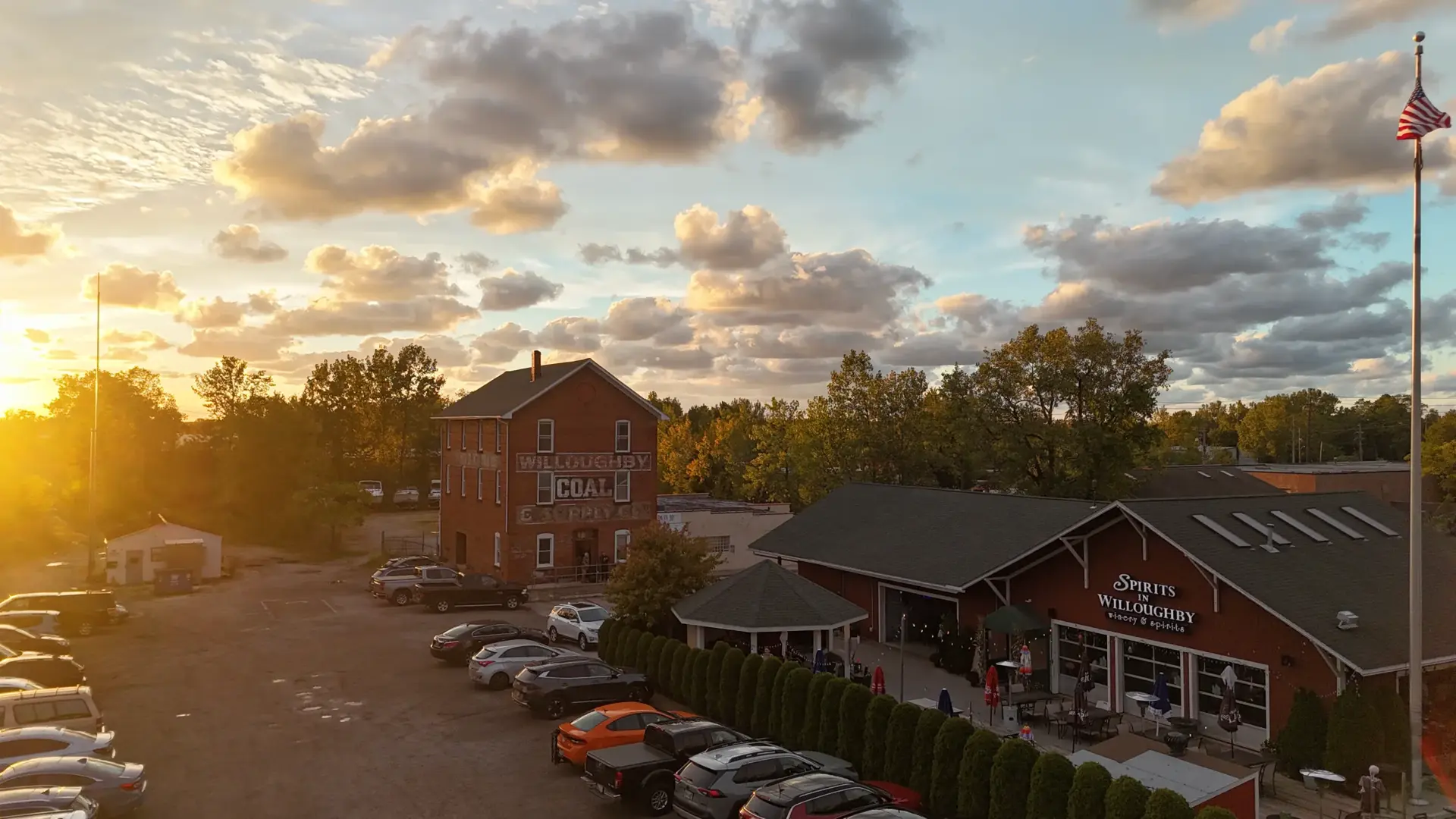 Today
Today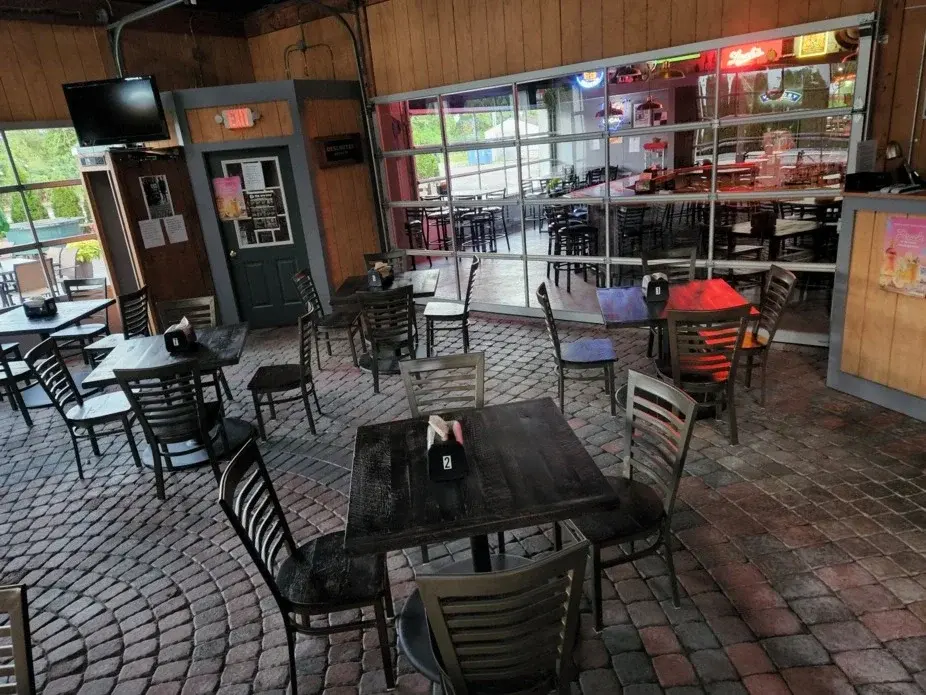
06 — Spirits Today
A historic building. A new chapter.
From Willoughby Coal to Spirits in Willoughby
The building survived while Downtown Willoughby evolved around it. Storefronts changed, rail uses faded or shifted, and the commercial life of Erie Street reinvented itself more than once. Through those changes, the former coal-and-supply landmark kept its industrial silhouette.
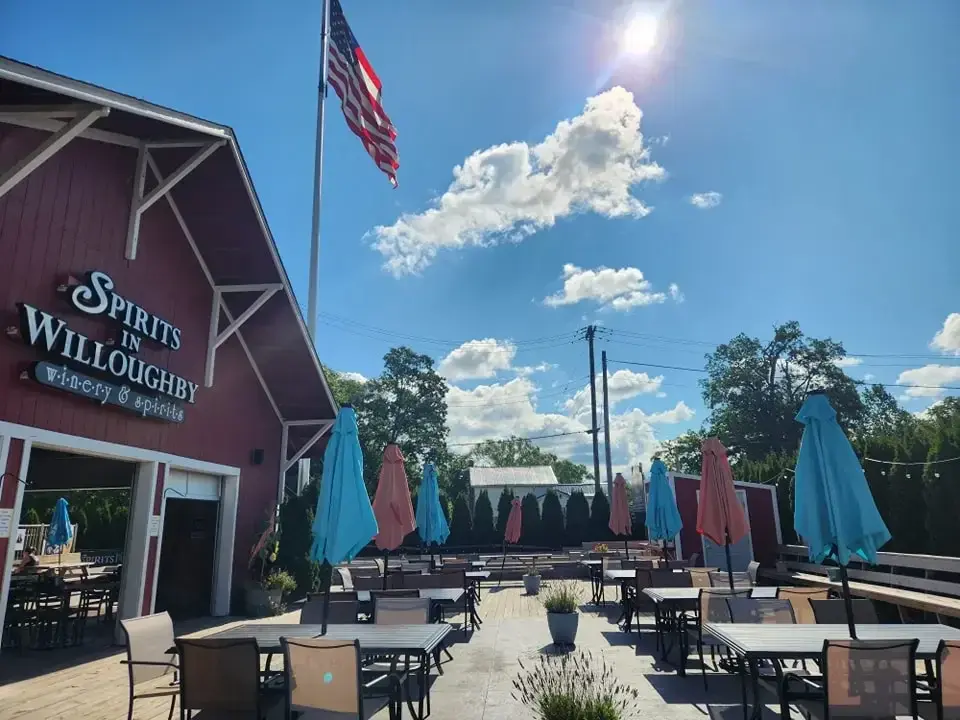
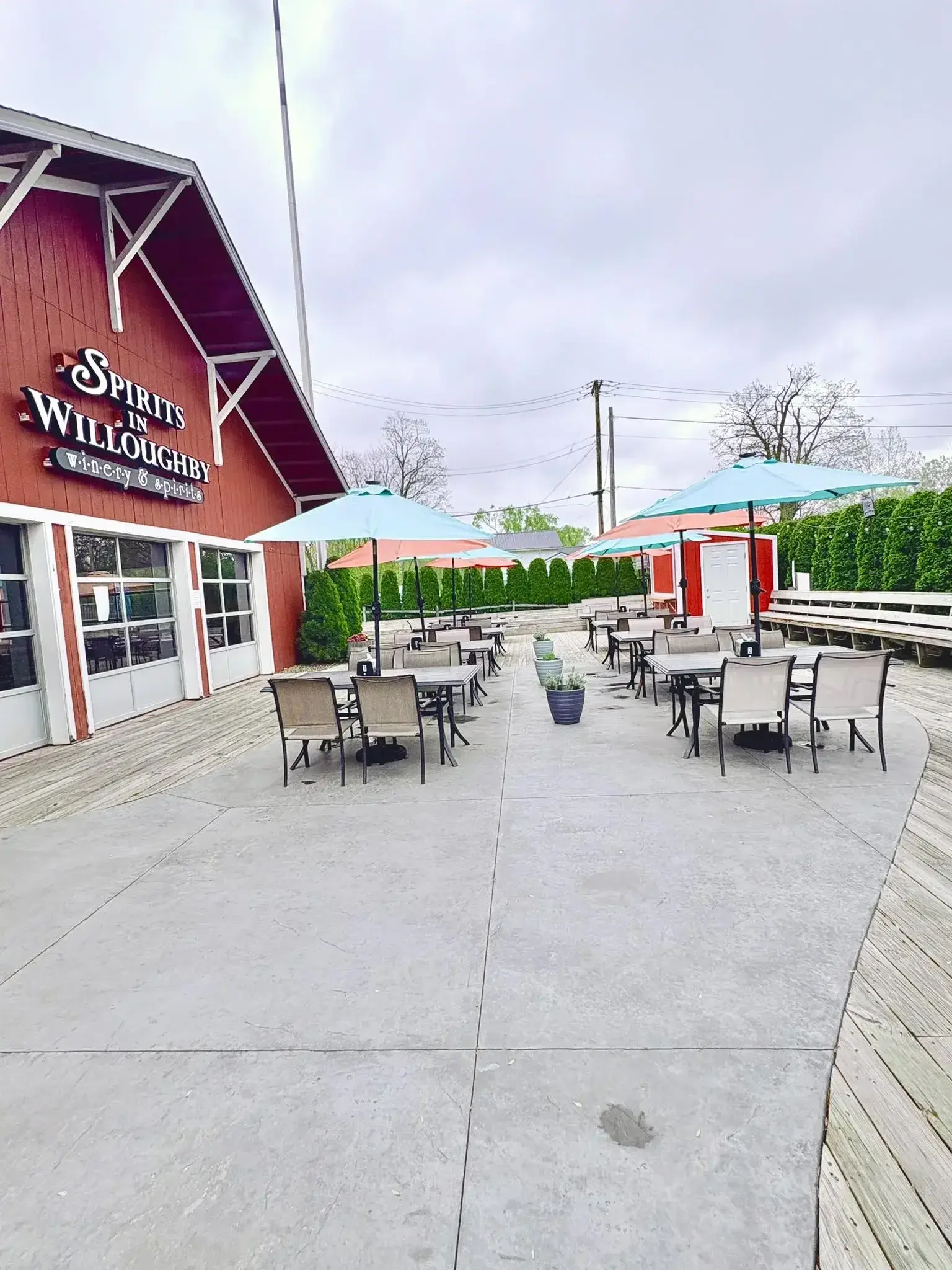
Today the property operates as Spirits in Willoughby — a restaurant, bar, event, and community gathering space. Exposed brick, structural scale, and the coal-company identity remain part of its visual story. Guests still feel the industrial architecture even when the evening's purpose is dinner, a cocktail, or a private celebration.
Not every visible feature should be assumed original unless verified. Adaptive reuse preserves character while updating systems, finishes, and layouts for hospitality. What endures is the sense of place: a historic Willoughby, Ohio building that still hosts the neighborhood, just under a different name and purpose.
Whether you come for the menu, check upcoming events, or plan a gathering through private bookings, you are stepping into a property that has long been connected to Willoughby community life — even as that connection changed from coal deliveries to hospitality.
What History Tells Us — And What It Doesn't
A compact fact-check for readers who want the distinction between supported claims and open questions without reading the full narrative again.
Well Supported
- Surviving historic industrial building at 3872 Erie Street, Willoughby, Ohio
- Approximately late 19th century construction (c. 1893)
- Early flour-mill association in multiple historical accounts
- Coal-company use beginning around 1912
- Long-standing Willoughby Coal & Supply identity
- William “Don” Norris died at or immediately beside the property on April 2, 1947
- Later prominence in ghost tours, paranormal books, and regional media
- Building now operates as Spirits in Willoughby
Still Unresolved
- Exact official manner of Norris’s death
- Whether foul play occurred
- Details of the alleged partnership agreement after Norris’s death
- Whether “Zip” can be matched to a verified employee or resident
- Whether earlier depot, cheese-factory, or stagecoach references belong to the surviving brick structure or the surrounding site
Sources & Further Reading
Secondary sources and regional coverage consulted or commonly cited in public discussion of Willoughby Coal history. Book titles are listed by name; external links open in a new tab.
- The News-Herald — “Willoughby Coal traces history to late 1800s”
- Cleveland Scene — coverage of Willoughby Coal paranormal investigations
- America's Most Haunted — “Return to Willoughby Coal”
- Cathi Weber, Haunted Willoughby, Ohio (book)
- Theresa Argie and Eric Olsen, America's Most Haunted (book)
- Lake County Auditor property records (institutional reference)
- City of Willoughby historical resources (institutional reference)
- Cleveland Magazine and additional regional media coverage
Secondary sources sometimes disagree on dates and causal claims. Where those sources conflict with each other or with unverified legal records, this page prefers caution over narrative neatness.